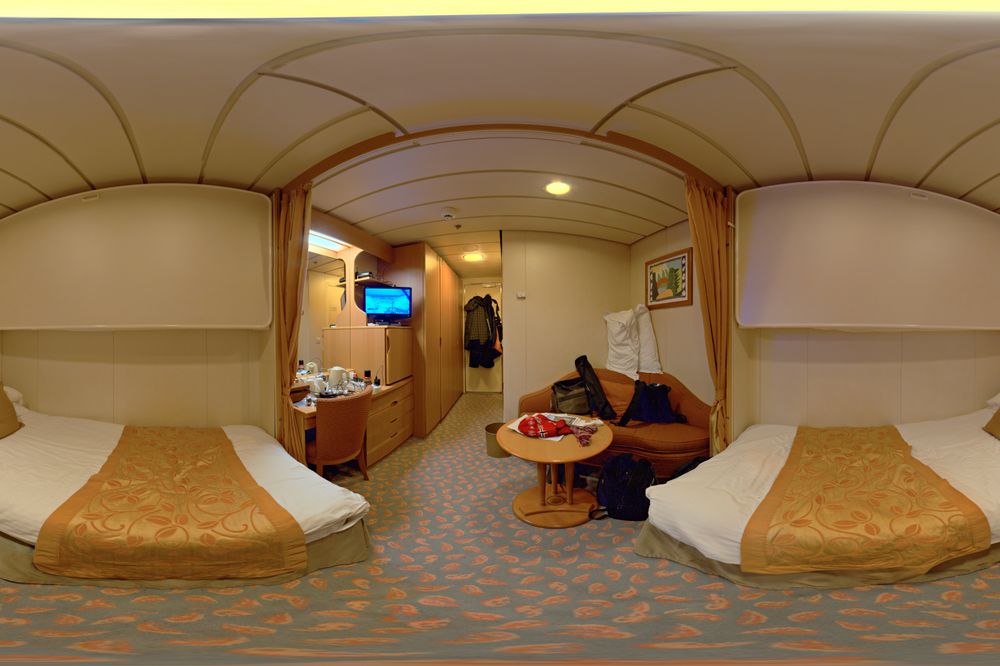
A ship is both your workplace and your home. MLC Title 3 sets the minimum standards for that home, with measurements. Construction requirements apply to ships built after the Convention entered into force for the flag State; older ships follow the earlier ILO conventions (Nos 92 and 133).
General requirements
- Minimum headroom of 203 cm where full and free movement is needed.
- On ships other than passenger ships, sleeping rooms must be above the load line, amidships or aft.
- No direct openings into sleeping rooms from cargo or machinery spaces, galleys or communal toilets.
- Air conditioning except on ships trading in temperate climates; heating except on ships exclusively in tropical waters.
- Sleeping and mess rooms must have natural light.
Cabins (Standard A3.1, para 9)
- On ships other than passenger ships, an individual sleeping room for each seafarer (exemptions possible under 3,000 GT and on special purpose ships).
- Separate sleeping rooms for men and women.
- A separate berth for each seafarer, at least 198 × 80 cm inside.
- Single-berth floor area: 4.5 m² under 3,000 GT, 5.5 m² from 3,000 to 10,000 GT, 7 m² at 10,000 GT or over.
- Officers without a private day room: 7.5 / 8.5 / 10 m².
- The master, chief engineer and chief mate get an adjoining sitting room in addition.
- Each occupant gets a lockable clothes locker of at least 475 litres plus a 56-litre drawer, and a desk.
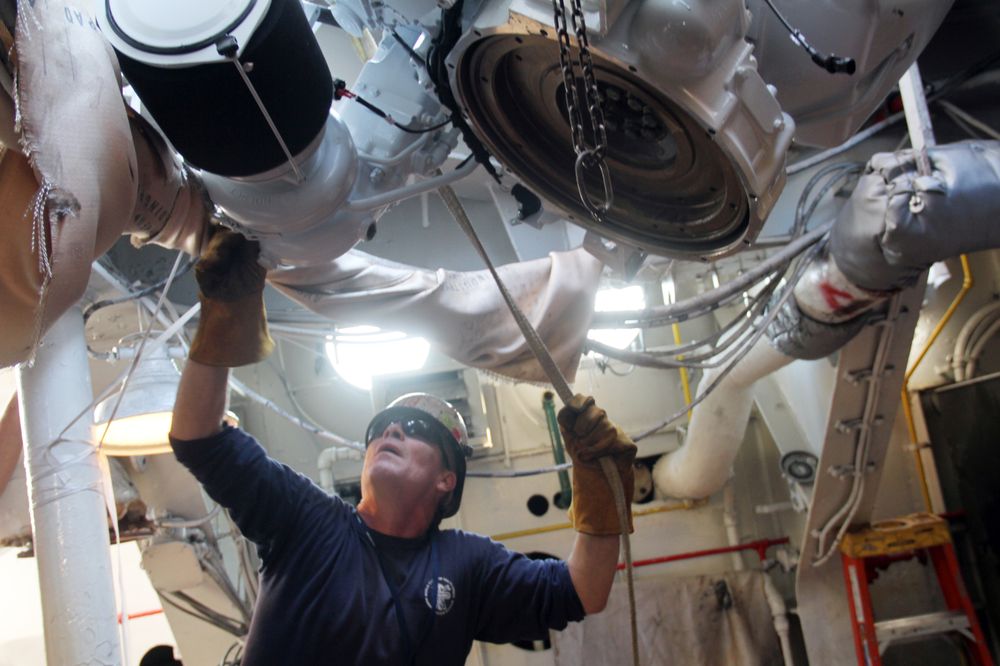
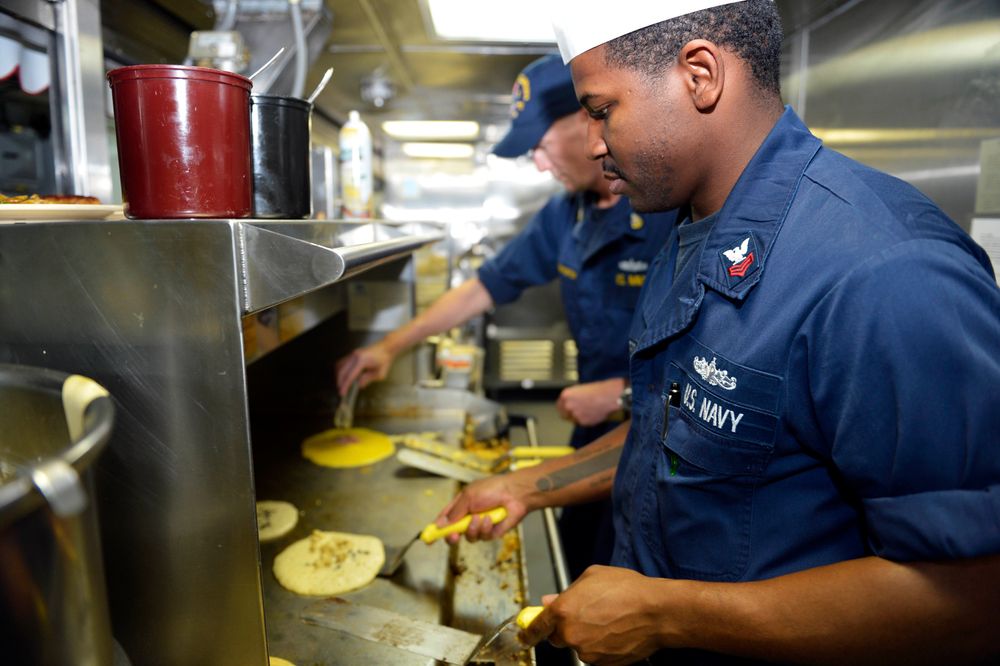 Image: Naval Surface Warriors / Wikimedia Commons, CC BY-SA 2.0
Other spaces
- At least one toilet, one washbasin and one shower or bath for every six people without personal facilities; hot and cold fresh water.
- Hospital accommodation on ships carrying 15 or more seafarers on voyages of more than three days.
- Laundry facilities, open-deck space for off-duty time and suitable recreational facilities.
- Guideline B3.1.11 recommends reasonable access to ship-to-shore telephone, email and internet, at reasonable charges.
Food and water (Regulation 3.2)
- Food is provided free of charge during your engagement.
- Food and drinking water must be adequate in quantity, nutritional value, quality and variety, taking account of religious and cultural practices.
- Ship's cooks must be trained and qualified; no one under 18 may be the cook.
- Food, water, storerooms and the galley are inspected frequently by the master, and the inspections are documented.
Practical tip: Accommodation, food and water are among the most frequently recorded MLC deficiencies in port State inspections. Raise the problem first through the on-board procedure (part 12).
Source: ILO, Maritime Labour Convention, 2006 — Regulations 3.1, 3.2, Standards A3.1, A3.2. This article is based on the MLC 2006 text published by the ILO and is for general information. Your flag State's law or your collective agreement may give you more favourable terms; in a specific dispute, talk to your union or a lawyer.
Full series: MLC 2006 Guide: Seafarers' Rights