
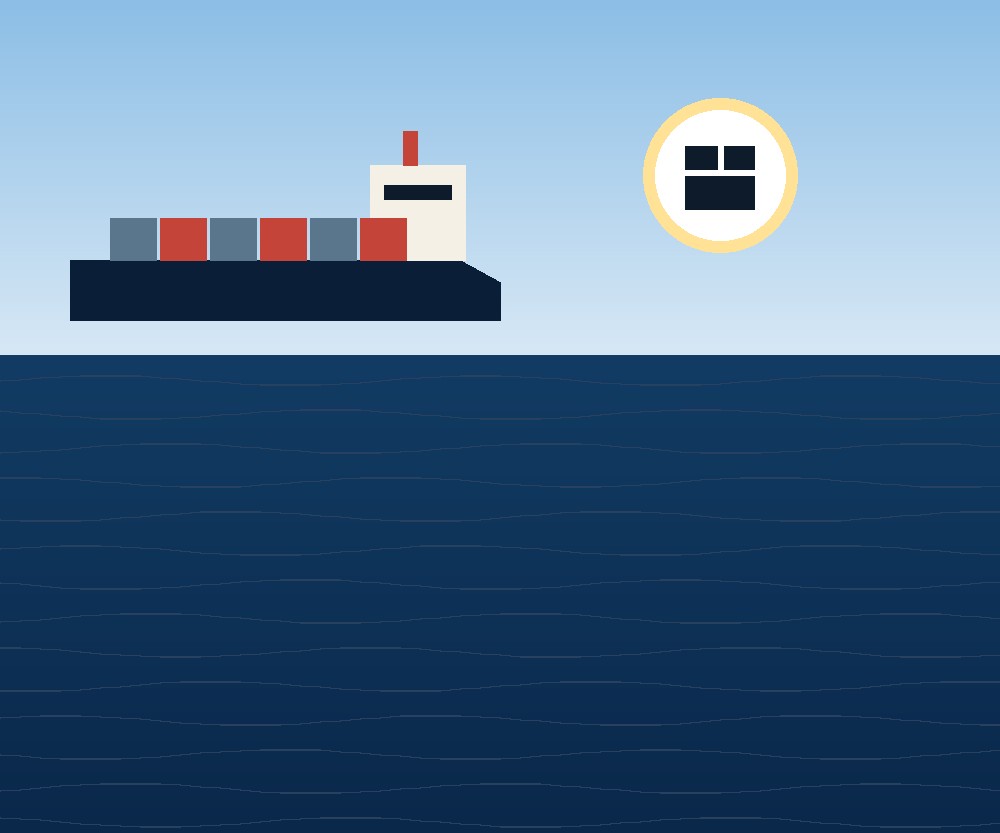
Container ships are perhaps the most recognizable symbol of world trade — the ship type that stands out first in any port, stacked high with colorful boxes. But behind that visibility is a fairly disciplined working rhythm.
Cargo characteristics
Cargo travels in standard-size (20 or 40 foot) containers, which makes loading and discharge far faster and more predictable than most other ship types. But that speed also means a tight port rhythm for the crew on board: container ships typically swap their entire cargo and get moving again within hours.
Risks and challenges
- Stability from stacking. If the weight distribution of thousands of containers isn't calculated correctly, the ship's balance can be thrown off — largely automated today, but officer oversight is still essential.
- Container loss in bad weather. Containers stacked high on deck can go overboard in severe storms — both a cargo loss and a safety hazard.
- Intense port rhythm. Short port stays can make it harder for the crew to properly plan rest hours under MLC requirements.
Career and salary expectations
Container ship experience is one of the most common and in-demand experience types in the industry — with a large fleet size, job opportunities are relatively plentiful. The salary range sits mid-to-upper tier; while not as high as tankers, it offers a regular sailing schedule and predictable rotation. Working on major trade lanes (like Far East–Europe) stands out as international experience on a CV.
This article is general information; working rhythm varies by trade lane and company policy.