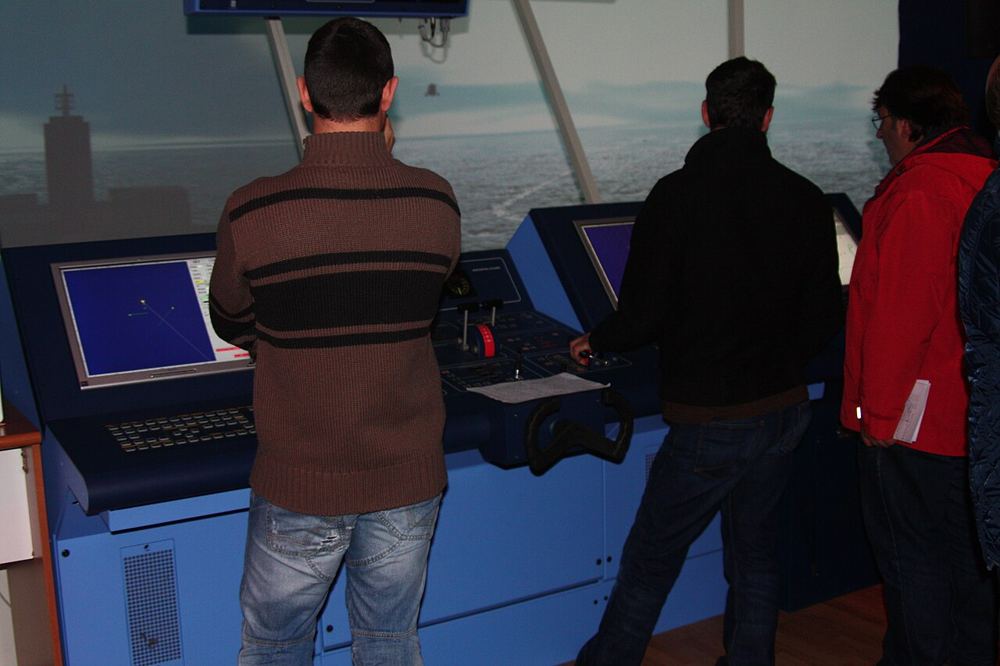
On the bridge, orders must be short, clear and standard. The helmsman repeats the order back and reports when it is carried out.
Helm orders
| Order | Plain-English meaning | |---|---| | Port ten | Put the wheel to port, ten degrees of rudder. | | Starboard twenty | Put the wheel to starboard, twenty degrees. | | Hard a-port / Hard a-starboard | Full rudder to port / starboard. | | Midships | Rudder straight, in the centre. | | Steady | Hold the heading the ship has at this moment. | | Steady as she goes | Keep the present course. | | Ease to five | Reduce the rudder angle to five degrees. | | Meet her | Apply opposite rudder to check the swing. | | Nothing to port / starboard | Do not let the ship's head move to that side. | | Course 090 | Steer heading 090 degrees. |
Helmsman's replies
He repeats the order: "Port ten." When it is executed: "Wheel is port ten." On the new heading: "Steady on 090."
Engine orders
| Order | Plain-English meaning | |---|---| | Full ahead | Maximum speed forward | | Half ahead | Medium speed forward | | Slow ahead | Low speed forward | | Dead slow ahead | Lowest speed forward | | Stop engine | Stop the main engine | | Dead slow / Slow / Half / Full astern | The same speeds, going backwards | | Finished with engines | Manoeuvring is over; engines are no longer needed |
Tips
- Make sure the helmsman heard you before you move on.
- If there is no reply, repeat the order.
- Speak quickly but clearly. Avoid vague words.
Note: exact procedures vary slightly between ships and companies. Learn your ship's bridge procedures.