There is no fire brigade at sea; the crew puts out the fire. Here is the main firefighting equipment onboard and the basic rules for using it, card by card.
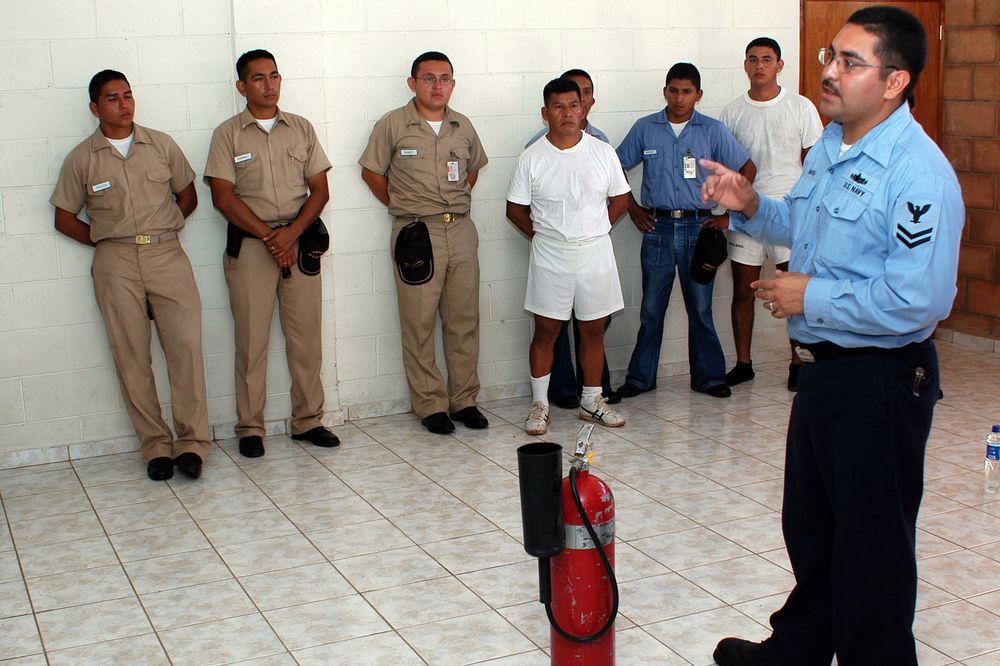 Image: U.S. Navy / Wikimedia Commons, Public domain
Portable Fire Extinguisher
Dry powder, CO₂ and foam types, each suited to different fire classes. Use CO₂ on electrical panels and foam on oil fires. Sequence: pull the pin, aim at the base, squeeze and sweep.
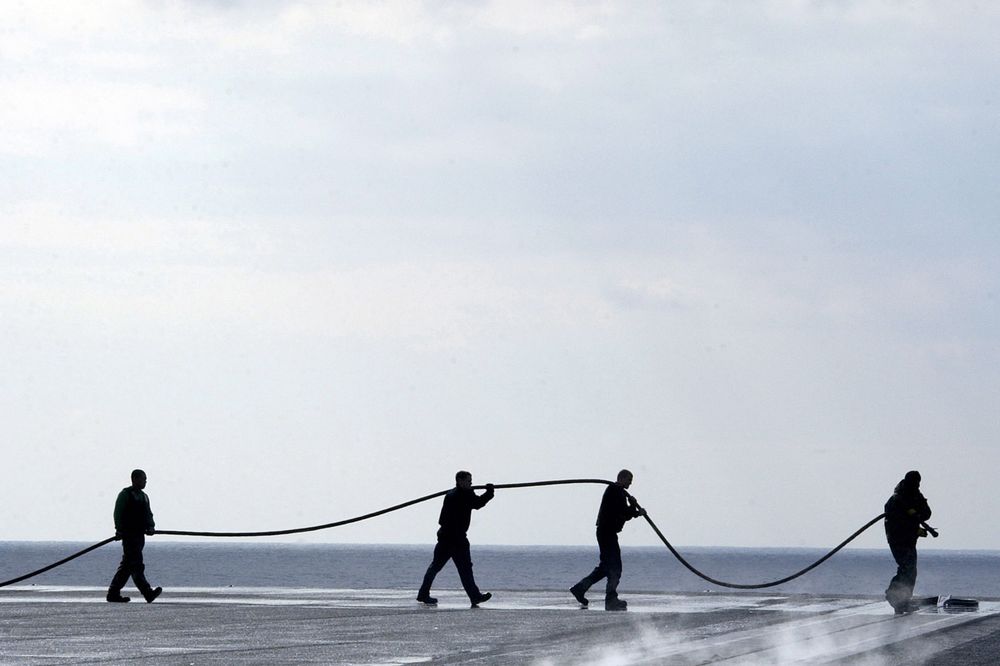 Image: U.S. Navy / Wikimedia Commons, Public domain
Fire Hose and Nozzle
Connected to the fire hydrants and used with a dual-purpose jet/spray nozzle. Spray both cools and shields the team from heat. Hoses should be kept connected-ready and inspected in their boxes.
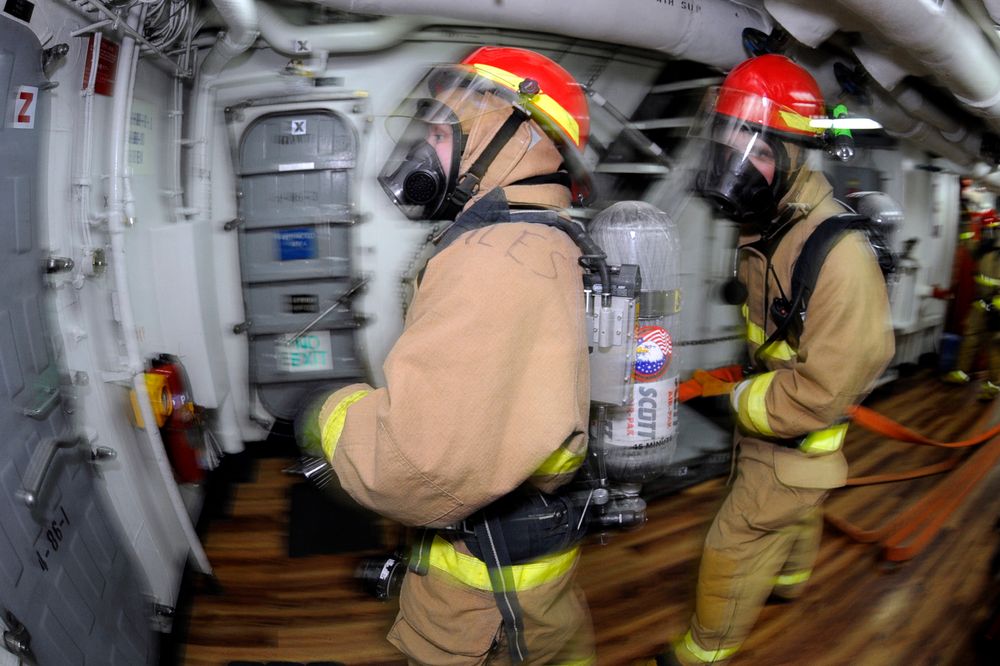 Image: U.S. Navy / Wikimedia Commons, Public domain
Breathing Apparatus (SCBA) and Fireman's Outfit
A back-mounted compressed-air cylinder and face mask for entering smoke-filled spaces. The fireman's outfit adds suit, boots, gloves, helmet, lamp and lifeline. Check cylinder pressure and the low-pressure alarm at every drill.
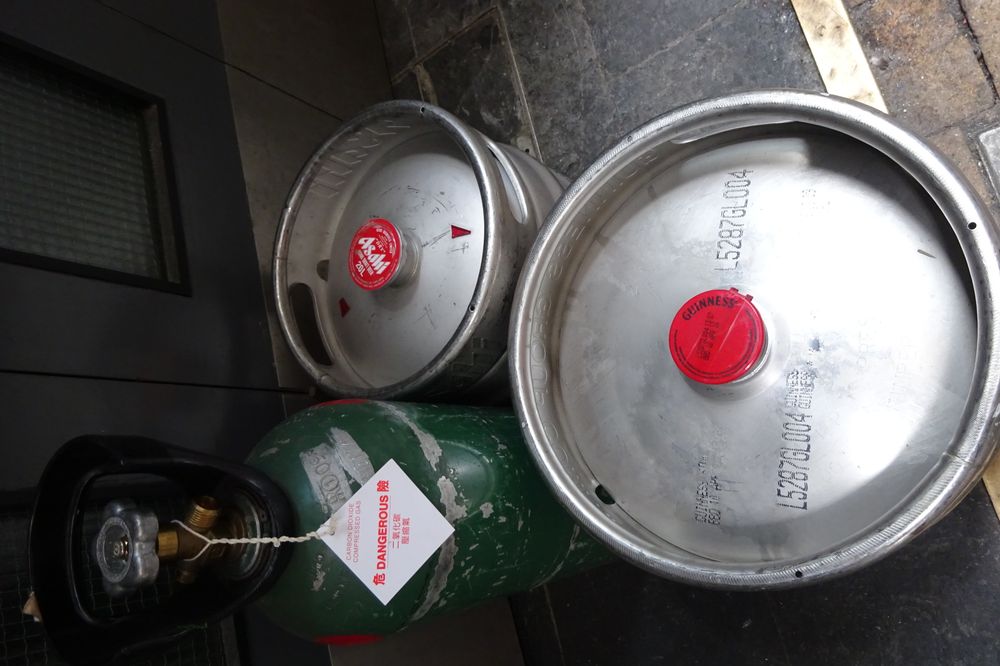 Image: Simon Leung gg / Wikimedia Commons, CC BY-SA 4.0
Fixed CO₂ System
A fixed system for engine rooms and holds. CO₂ extinguishes by displacing oxygen, so the space must be fully evacuated and a headcount taken before release. Only the master or an authorised officer orders release.
Find out today where the nearest extinguisher and hydrant are to your own workplace.
This post is part of the Emergency Equipment Onboard series. Full series: /blog/seri/emergency-equipment-onboard
Related reading: Emergency Drills That Actually Work