The European Union did not wait for the global IMO process and introduced its own rules. For ships of 5,000 GT and above calling at EU ports, two regulations stand out.
EU Emissions Trading System (EU ETS)
From 1 January 2024, shipping was brought into the EU carbon market. Companies must surrender emission allowances for every tonne of CO₂ emitted.
- Scope: 100% of emissions on voyages between EU ports and at berth, and 50% of emissions on voyages into or out of the EU.
- Phase-in: allowances for 40% of 2024 emissions, 70% of 2025, and 100% from 2026.
- From 2026, methane and nitrous oxide are covered in addition to CO₂.
FuelEU Maritime
In force since 1 January 2025, FuelEU Maritime limits the greenhouse gas intensity of energy used on board. Reduction targets against the 2020 reference value:
- 2025: 2%
- 2030: 6%
- 2035: 14.5%
- 2040: 31%
- 2045: 62%
- 2050: 80%
In addition, certain passenger and container ships must use shore power at major EU ports from 2030. Companies that miss the target pay penalties; ships that outperform can bank or pool their surplus.
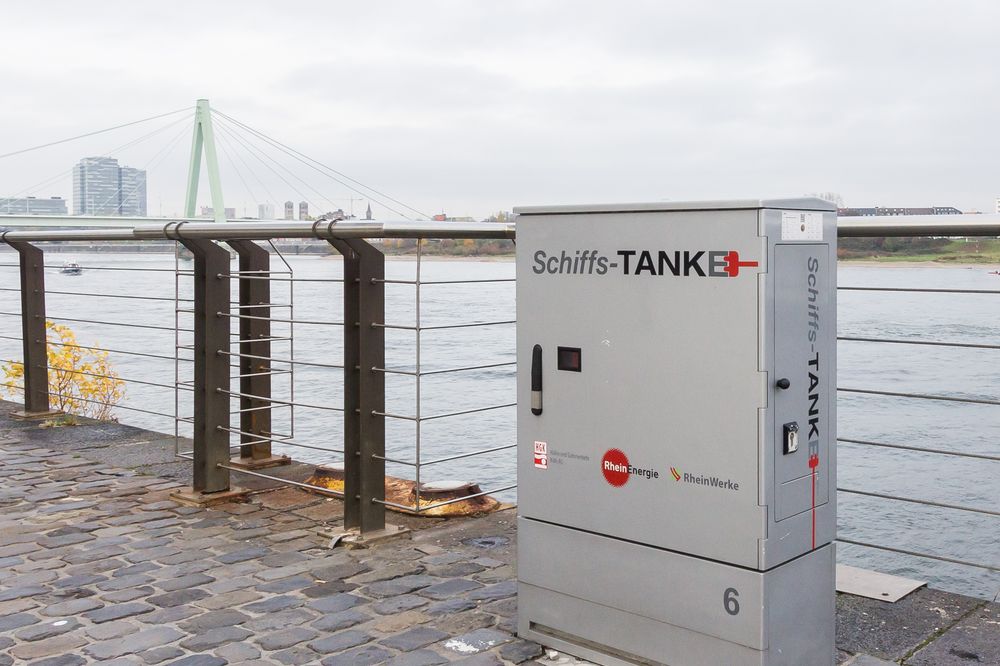 Image: Raimond Spekking / Wikimedia Commons, CC BY-SA 4.0
What it means on board
- Monitoring and reporting: under the EU MRV system, fuel, distance and emissions data are reported and verified for every voyage.
- Fuel choice: biofuel blends and alternatives such as LNG appear more often on EU voyages; fuel changeover and bunker records gain importance.
- Port operations: connecting to shore power is becoming a routine task for bridge and engine teams.
- Charter parties: who pays the ETS cost — owner or charterer — is now a separate clause.
For seafarers of any nationality
Every ship trading regularly to EU ports is subject to these rules, whatever its flag. Experience with data reporting and new fuels on European trades is now a concrete plus on a CV.
Practical tip: If you join a ship trading to the EU, read the SEEMP and MRV reporting procedures in your first week; many companies have distributed them to officers.
Regulations are changing fast; this article is general information. For exact, current requirements rely on the IMO, your flag State and your company's SMS instructions.
Full series: The Green Transition in Shipping