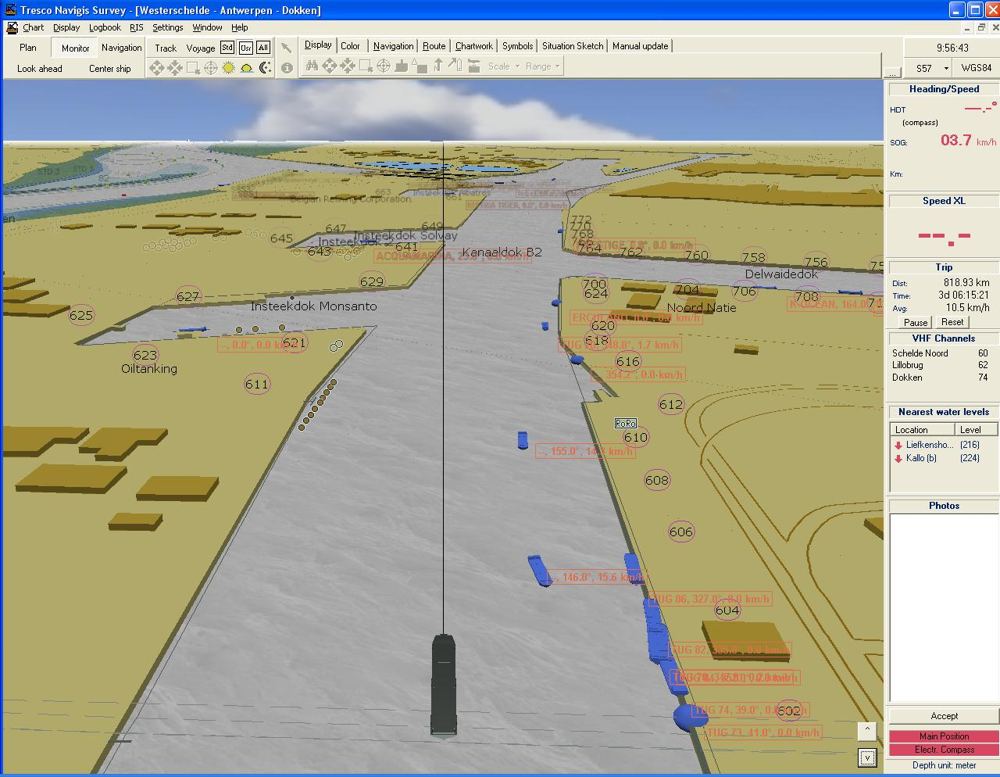
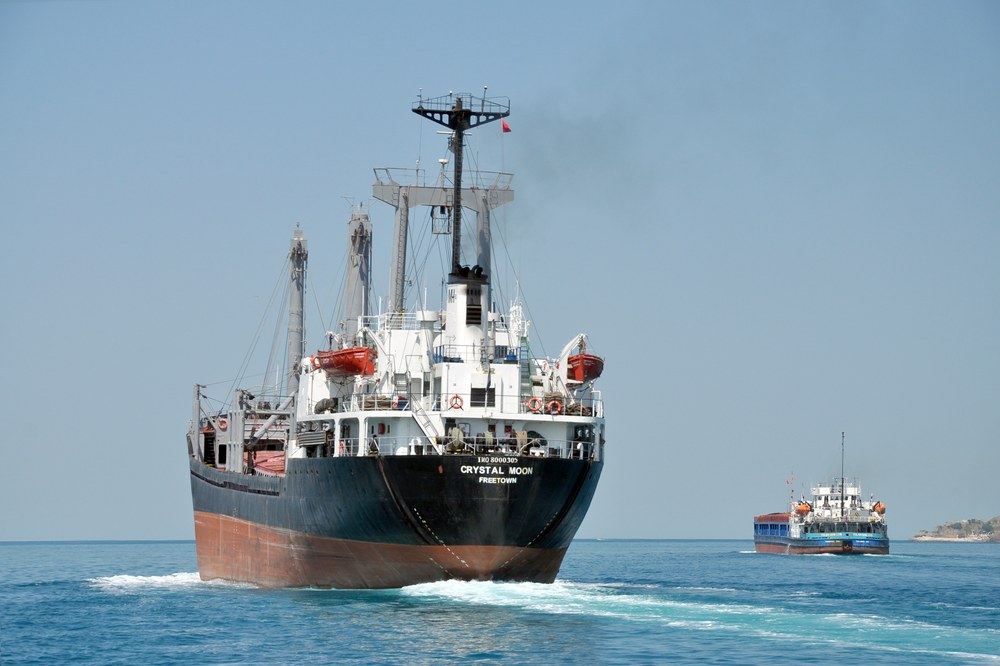
Rule 8 sets the general collision-avoidance principle that applies in every situation; Rules 9 and 10 then regulate two specific types of waters: narrow channels and traffic separation schemes.
Rule 8 - Action to avoid collision
Any action taken shall, if the circumstances admit, be positive, made in ample time and with due regard to good seamanship. An alteration of course and/or speed shall be large enough to be readily apparent to a vessel observing visually or by radar; a succession of small alterations shall be avoided. With sufficient sea room, alteration of course alone may be the most effective action, provided it is made in good time, is substantial, and does not create a new close-quarters situation. Action taken shall result in passing at a safe distance, and its effectiveness shall be checked until the other vessel is finally past and clear. If necessary, a vessel may slacken speed, stop, or reverse propulsion. A vessel required not to impede another vessel's passage must, when the circumstances require, take early action to allow sufficient sea room, and remains obliged to comply with the rules of this Part if risk of collision develops.
Rule 9 - Narrow channels
A vessel proceeding along a narrow channel or fairway shall keep as near the outer limit on her starboard side as is safe and practicable. Vessels under 20 metres and sailing vessels must not impede a vessel that can navigate safely only within the channel; the same applies to fishing vessels. A vessel must not cross a narrow channel if doing so impedes a vessel that can only navigate within it; the latter may sound the Rule 34(d) signal if in doubt about a crossing vessel's intentions. Where overtaking in a narrow channel requires the vessel being overtaken to act, the overtaking vessel signals her intention under Rule 34(c)(i); the vessel being overtaken signals agreement under 34(c)(ii). This does not relieve the overtaking vessel of her Rule 13 obligations. A vessel nearing a bend or obstruction sounds one prolonged blast under Rule 34(e). Anchoring in a narrow channel should be avoided if circumstances permit.
Rule 10 - Traffic separation schemes
This rule applies to IMO-adopted traffic separation schemes and does not relieve any vessel of her other obligations. A vessel using a scheme shall: proceed in the appropriate lane in the general direction of flow; keep clear of the separation line or zone so far as practicable; normally join or leave at the termination of a lane, or, if from the side, at as small an angle as practicable. A vessel shall avoid crossing lanes where possible, but if obliged to, shall cross on a heading as nearly as practicable at right angles to the flow. Except vessels under 20 metres, sailing vessels and fishing vessels, a vessel shall not use an inshore traffic zone when she can safely use the adjacent lane (exceptions apply for reaching a port, pilot station, or avoiding immediate danger). A vessel shall not normally enter a separation zone or cross a separation line except in emergency or to fish within it. Vessels shall navigate with particular caution near scheme terminations and avoid anchoring there and within the scheme generally. A vessel not using a scheme shall avoid it by as wide a margin as practicable.
Rules 9 and 10 are the backbone of daily navigation in most straits and port approaches.