
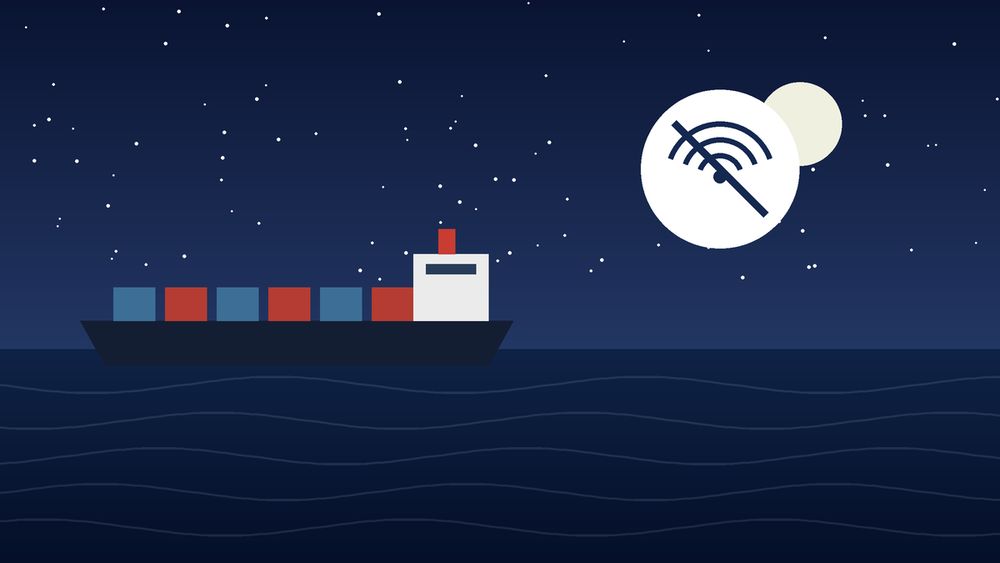
It's hard to imagine a day without internet ashore. On a ship, weeks of limited, slow, or nonexistent connectivity are treated as normal. Why?
Where the problem comes from
- Dependence on satellite: In open water, satellite is the only option, and it is slower and more expensive than shore networks.
- Shared, limited data: The ship's total bandwidth is split across the whole crew — if everyone streams video at once, the connection collapses.
- Dependence on being near a coast: Some ports allow you to pick up a terrestrial network, but it's temporary and disappears once the ship moves.
- Cost: Satellite data plans are expensive for companies, which is why many ships keep crew internet allowances small.
What this actually costs you
It's not just an inconvenience. Not being able to talk to your family regularly increases the feeling of isolation. Hearing urgent news late creates stress. Even simple things like banking, an official form, or basic research can take days.
What can be done
Companies improving their crew internet policy is one part of the answer. But seafarers also have a tool in their own hands: eSIM. When entering a port or within reach of a terrestrial network, it lets you activate a local or regional data line on your phone instantly, without buying a physical SIM card.
We continue this in the next article, explaining why Faroys is building infrastructure in this exact area.
This article is general information; your ship's internet policy varies by company.