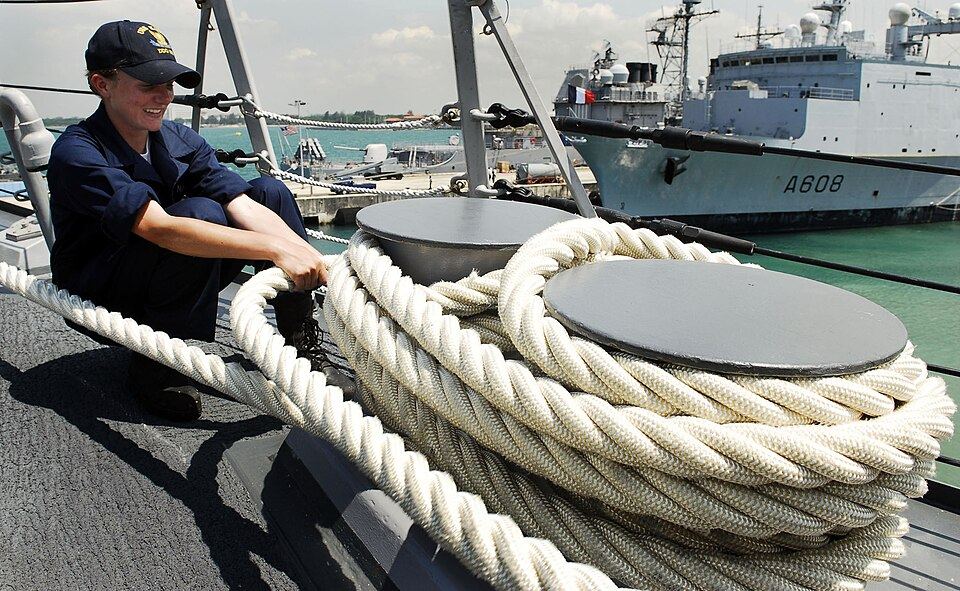
Mooring and unmooring involve heavy loads, moving vessels and tensioned lines. Accidents often come from a moment of inattention or standing in the wrong place.
Know the danger areas
- Snap-back zone: the area a rope could sweep across if it parts. Never stand in it and never stand in a bight of a rope.
- Winch and windlass area: keep hands, clothes and hair away from moving parts.
- Fairleads and bollards: watch for pinch points.
Safe habits
- Toolbox talk before starting. Who does what, which lines, which signals?
- Wear the right PPE: helmet, gloves, safety shoes, high-visibility clothing and a lifejacket where required.
- Clear communication between the bridge, forward and aft stations, with standard signals when noise is high.
- Inspect lines and equipment. Worn, damaged or wrongly stowed lines are a hazard.
- Stop the job if conditions change or something feels unsafe. Any crew member can call "stop".
Leadership matters
Officers in charge should supervise from a safe position and never rush the crew.
Going home safely is more important than a fast mooring.